Loading page
Communication Skills
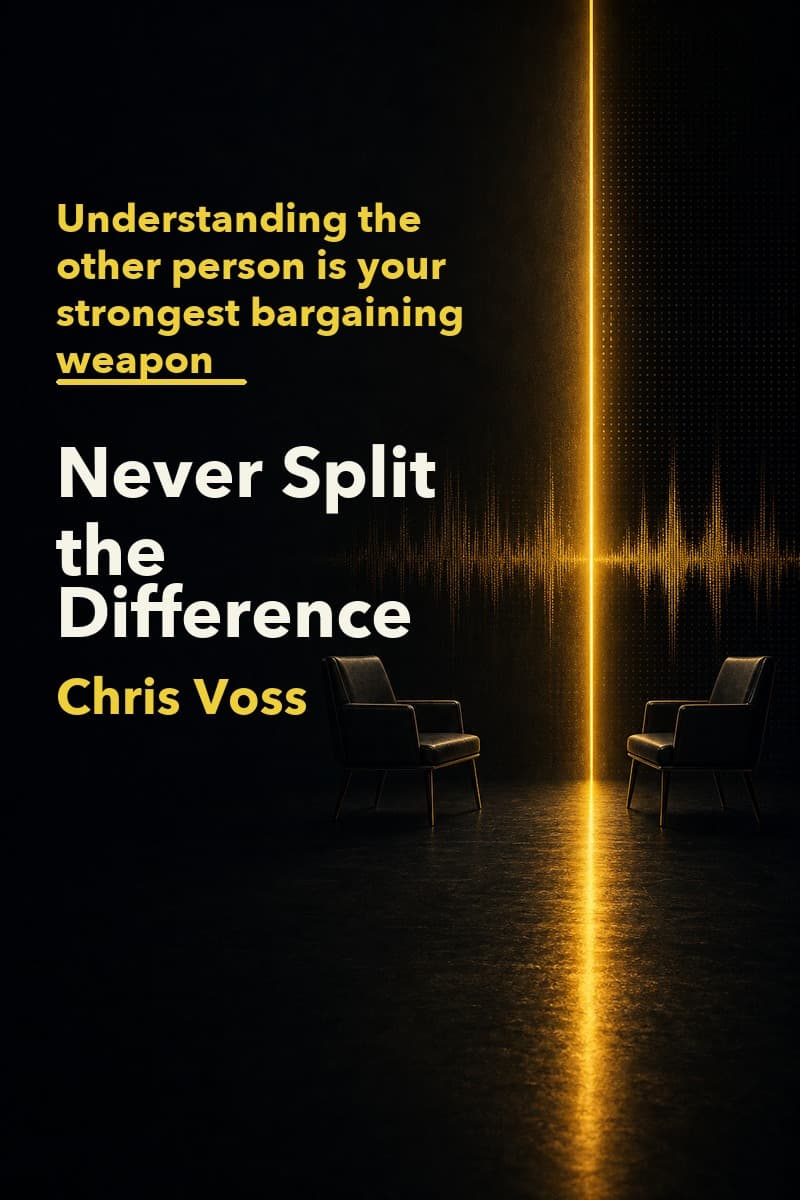
Never Split the Difference
Chris Voss
Never Split the Difference
18 min
3 ideas from this book
What happens when you both give up half?
A woman wants her husband to wear black shoes with his suit. He wants brown. They meet halfway, and he walks out the door in one black shoe and one brown shoe.
Try today: Next time you plan to compromise, first look for a third option.
A no is worth more than a quick yes.
Saying no makes the person saying it feel safe and in control. Someone who's just said no feels protected, relaxes, and becomes more open to listening. An early yes, on the other hand, is often fake. People say yes to get rid of you.
Try today: Ask someone a question where no is a safe, easy answer.
How do you get someone to tell you more?
You repeat someone's last three words, or the one to three that matter most, as a question, and then you go quiet. They open up the same point in other words, and they usually tell you more.
Try today: In your next chat, repeat their last three words as a question.
This book also has a Turkish summary
Open the Turkish book-summary page for Sen Bitti Dediğinde and explore the same core ideas in another language.
A passage from the summary
A summary of the method Chris Voss built from FBI hostage negotiations. Mirrors, labels, questions that invite a no, "that's right" and calibrated questions; refusing to split the difference and hunting for the Black Swan. From Harvard to Haiti, told through the book's own cases.
Never Split the Difference book summary
Tellora's summary of Never Split the Difference is editorially prepared to help you explore the core ideas, notable insights, and practical takeaways from Chris Voss in about 18 minutes. Read this Communication Skills summary here, then listen to the full audio edition in the app.