Loading page
Relationships
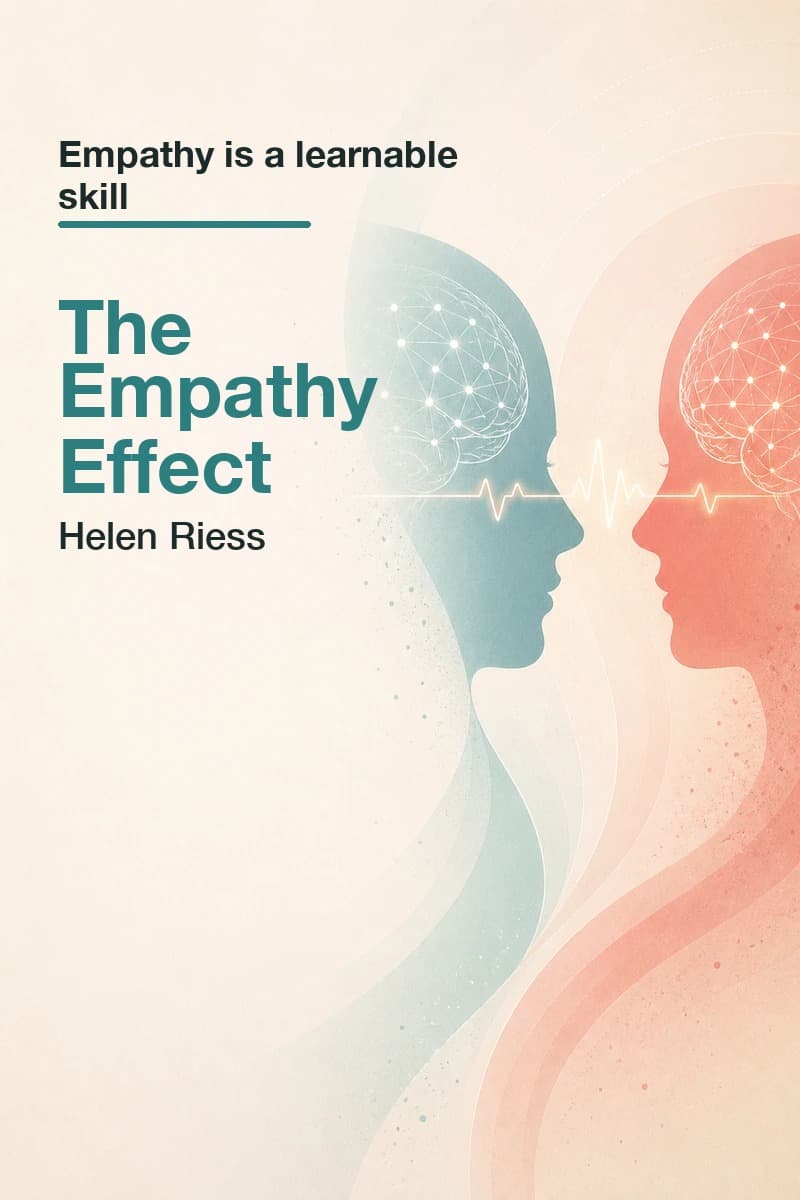
The Empathy Effect
Helen Riess
The Empathy Effect
19 min
3 ideas from this book
Do other people's moods really rub off on you?
When an angry person walks in, the air in the room changes. When the boss's jaw tightens in a meeting, every shoulder around the table creeps up. Next to someone cheerful, your face softens on its own.
Try today: Walk into your next meeting calm and notice who follows.
"I'm just not an empathic person" is an excuse.
If empathy is a personality trait, then saying you weren't born an empathic person is an alibi. If it's a learnable skill, the same sentence turns into a choice. Something three hours of training can move isn't fixed at birth.
Try today: Let the next person you talk to finish fully before you reply.
How do you show someone you're really listening?
As you start talking, notice the color of the other person's eyes. You don't have to remember the color. The point is that you looked long enough to see it.
Try today: Put your phone face down for your next conversation.
This book also has a Turkish summary
Open the Turkish book-summary page for Empati Etkisi and explore the same core ideas in another language.
A passage from the summary
A summary of Helen Riess's neuroscience-based book on empathy. It shows that empathy is not a fixed inborn trait but a learnable skill, and explains how to strengthen it at work, in the family, and in relationships through ideas like emotional contagion, nonverbal communication, and perspective-taking.
The Empathy Effect book summary
Tellora's summary of The Empathy Effect is editorially prepared to help you explore the core ideas, notable insights, and practical takeaways from Helen Riess in about 19 minutes. Read this Relationships summary here, then listen to the full audio edition in the app.