Loading page
Money & Investments
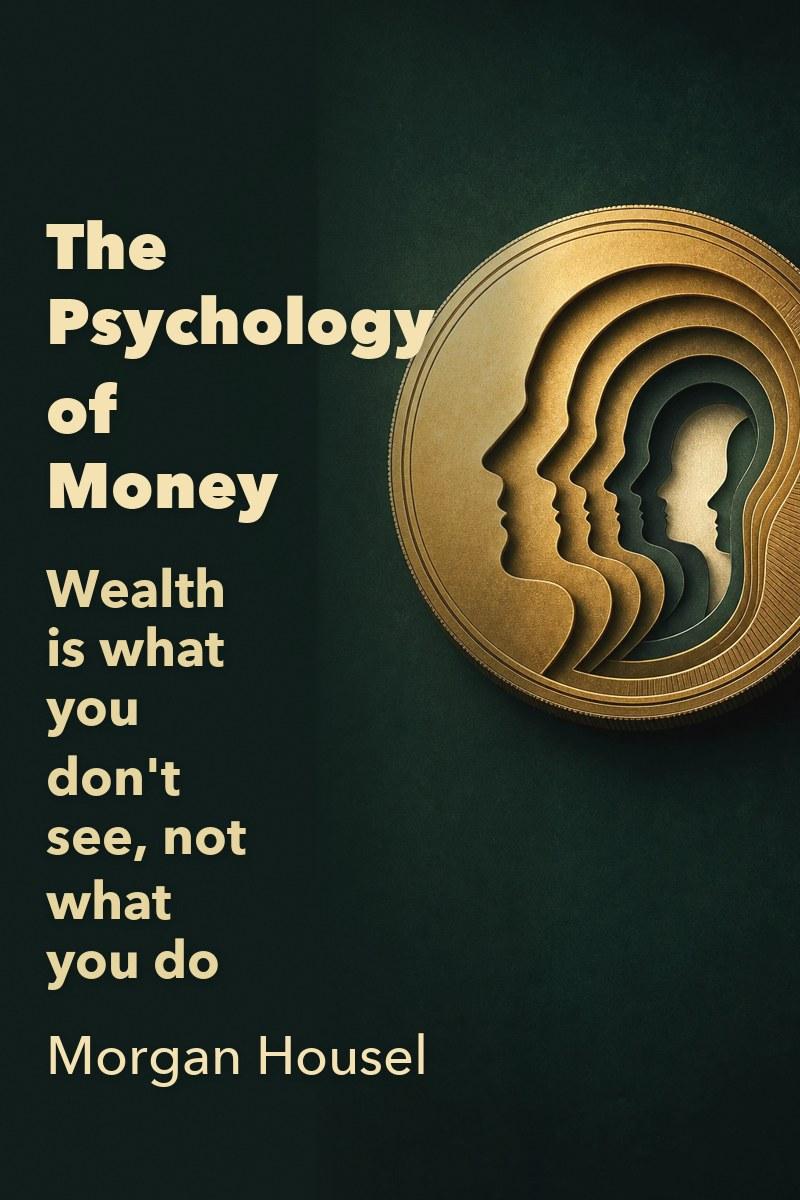
The Psychology of Money
Morgan Housel
The Psychology of Money
15 min
3 ideas from this book
How come a raise never seems to feel like enough?
If your expectations rise along with your results, you'll feel exactly the same after all that extra effort. One step forward pushes the goalpost two steps ahead, and because you feel you're falling behind, you take on bigger and bigger risks.
Try today: Next time you earn more, keep your lifestyle the same for a month.
Real wealth is the money you didn't spend.
Looking rich is about the income you have today, and it's easy to spot. Wealth, on the other hand, is income you haven't spent. It's the car not bought, the watch not worn, the first-class upgrade turned down.
Try today: Pass on one upgrade or extra you'd normally say yes to today.
Should you copy the habits of a huge success story?
Instead of drawing lessons from single extreme cases, look for broad patterns. The more extreme the outcome, the likelier that luck or risk played a big part, and the less the story applies to your life.
Try today: Before copying a success story, find three who tried and failed.
This book also has a Turkish summary
Open the Turkish book-summary page for Paranın Psikolojisi and explore the same core ideas in another language.
A passage from the summary
A summary of Morgan Housel's book on money and behavior. It shows that doing well with money depends less on intelligence than on behavior, and it covers how past experience builds beliefs, how luck and risk are twins, the sense of enough, the power of time in compounding, staying in the game, and the wealth you can't see, through the stories of Ronald Read, Bill Gates, Kent Evans, Rajat Gupta, Warren Buffett, and Rick Guerin.
The Psychology of Money book summary
Tellora's summary of The Psychology of Money is editorially prepared to help you explore the core ideas, notable insights, and practical takeaways from Morgan Housel in about 15 minutes. Read this Money & Investments summary here, then listen to the full audio edition in the app.